=
Refined Toughness
Mercedes-Benz Special Trucks Unimog luxury show car

Mercedes-Benz Special Trucks has unveiled something few expected in the lead-up to the Unimog’s 80th anniversary. Created in collaboration with specialist converter Hellgeth Engineering, this one-off Unimog is reimagined not as an industrial tool but as an ultra-luxury show car, offering a glimpse of what a more exclusive future for the model could look like.

The Unimog traces its origins to post-war Germany, first conceived in 1948 by former Daimler engineers and initially built by Boehringer before Mercedes-Benz took over production in 1951 as a go-anywhere utility vehicle. Its portal axles, equal-size wheels and clever articulation made it unstoppable off-road, and over the decades it evolved from a humble farm tool into a global icon of rugged capability.

Turning to the striking show car seen here, it starts with the U 4023, one of the most capable off-road platforms Mercedes builds for civilian and military use. Portal axles, a flexible ladder frame, and selectable all-wheel drive with locking differentials remain at the core, ensuring the Unimog’s legendary all-terrain ability is untouched. Beneath the cab, however, the standard four-cylinder engine has been replaced by a 300 hp Mercedes-Benz OM 936 six-cylinder. Paired with revised transmission tuning, the upgrade promises smoother performance and added refinement on the move.

The exterior takes cues from modern luxury SUVs, adopting matte grey paintwork, aluminium beadlock wheels and a full LED lighting signature. A MirrorCam system replaces traditional mirrors with digital displays. The double cab accommodates up to four passengers, while premium leather upholstery, coloured stitching, ergonomic seating and leather floor mats transform the Unimog’s traditionally utilitarian cabin into something genuinely upmarket.

Mercedes-Benz says the project fulfils a long-standing request from international customers seeking greater comfort and visual presence without compromising the Unimog’s outstanding capability. Next year, this unique example will be tested by a customer in real-world conditions, providing data that may help inform a future production direction.

Faux Countach On Skate Wheels
Slawntach by Artifaxing & Slawn

British-Nigerian designer and artist Olalou Slawn has several intriguing automotive-adjacent projects this year. Beyond his collaboration with Formula 1 team Racing Bulls on a one-off British Grand Prix livery, Slawn has also teamed up with Artifaxing on a handmade art piece titled Slawntach, which recently sold for a jaw-dropping sum.

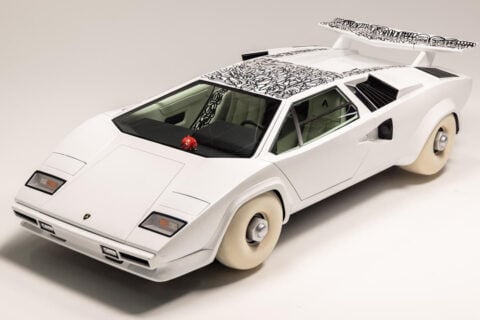
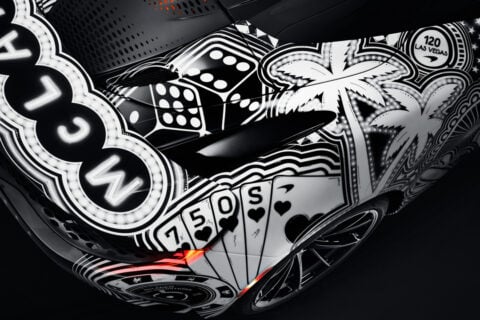
The Slawntach is not a car in any conventional sense. Built entirely from scratch and resembling a playful, distorted homage to the Lamborghini Countach, it sits on skateboard-inspired wheels and carries no mechanical ambition. Instead, it functions as a rolling sculpture, conceived to tour Miami during Art Basel as a mobile artwork. Slawn and Artifaxing fitted it with custom-upholstered seats, a tongue-in-cheek “Slawn Bullet” shifter and a full body of hand-painted motifs, turning the silhouette into a canvas rather than a machine. Despite having no ties to Lamborghini, the piece went viral after Lamborghini Miami reposted it.

Slawn later described the Slawntach as “an experiment,” a kind of cultural Trojan horse designed to test perception. If the public believes it could be real, he asked, does that belief somehow make it real? His collaborator Artifaxing echoed the sentiment, noting that what began as a light-hearted idea soon evolved into a months-long build involving a dedicated team.

Paraded through the city on a Slawn-branded tow truck, the Slawntach became one of Miami Art Week’s unexpected icons and was sold this week for US$333,000.

A Three-Colour Revival
Serica Ref. 6190 Tuxedo dial

Serica has revived one of its most distinctive designs with the return of the Tuxedo dial, now reimagined for the Ref. 6190. First introduced on the Ref. 4512 in 2022, the two-tone layout quickly became a cult favourite among enthusiasts, praised for its blend of graphic simplicity and mid-century elegance.

For 2025, the Parisian brand refines the formula with a three-colour enamel dial, hand-applied indexes, and a level of finishing that pushes the 6190 further upmarket without losing its tool-watch DNA. The central sector now features a deeper contrasting tone, flanked by a champagne-coloured ring and a black outer track, resulting in crisp legibility. Serica’s brushed handset, previously seen on early Field Watch models, also returns. Paired with bright white Super-Luminova C3, the combination enhances the watch’s character while keeping the design firmly contemporary.

Beneath the refined dial, the watch remains as robust as the standard 6190. The 37.7 mm stainless-steel case measures just 10.4 mm thick, including the crystal, yet offers 200 metres of water resistance. Twisted lugs with alternating finishes add a subtle sporting edge, while the double-domed sapphire crystal with an inner anti-reflective coating keeps distortion to a minimum. Inside sits the Soprod M100 COSC-certified calibre, a self-winding Swiss movement with a 42-hour power reserve and decorated bridges. Completing the package is Serica’s signature Bonklip bracelet, available in three sizes and fitted with a signed clasp.

Next Gen Motorsport Spirit
Audi GT50 Concept

Audi has marked the 50th anniversary of its legendary five-cylinder engine with a project that celebrates both heritage and future talent. Fourteen apprentices from the brand’s Neckarsulm facility in Germany have created the GT50 Concept, a one-off race car inspired by some of Audi’s most iconic motorsport machines. It is the fifth consecutive year Audi has given its trainees full responsibility for designing and building a complete vehicle, and the results are more ambitious than ever.

The team began with an Audi RS3 donor car, stripping it back to its bare structure before tackling the build’s greatest challenge: the bodywork. In a clever nod to the marque’s past, they grafted the roof from a classic Audi 80 onto the widened silhouette.

The GT50 Concept draws clear inspiration from the Audi 90 IMSA GTO and the 200 quattro Trans-Am of the late 1980s, complete with a handmade roll cage, enormous rear diffuser, wide arches and a towering rear wing. The exterior panels are crafted from glass-fibre-reinforced plastic, produced using laminated GFRP techniques familiar from top-tier motorsport. Lightweight wheels recalling Audi’s Le Mans racers and side-exit exhausts complete the dramatic look.

Once assembled and painted inside and out, the GT50 Concept made its debut at Audi’s end-of-year staff assembly in Neckarsulm, earning an enthusiastic reception from employees. More can be seen in the video below.


View this post on Instagram


A post shared by Heilbronner Stimme (@stimmeonline)

Illuminating the Testarossa
“Sanctified” by Anthony Hart

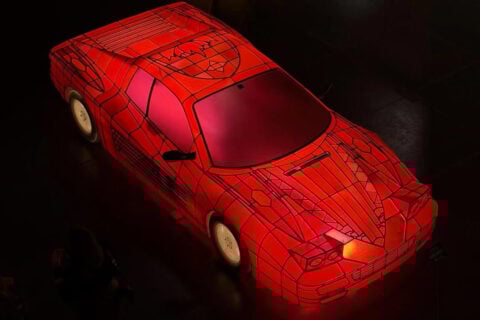
During Miami Art Week, one installation stood out for its clarity of intent and striking physical presence. Sanctified, a full-scale stained-glass Ferrari Testarossa by artist Anthony Hart, reimagines the 1980s classic as a modern symbol of cultural devotion.

Designed by Pininfarina and produced from 1984 to 1991, the Ferrari Testarossa, fitted with a mid-mounted 12-cylinder engine, became a defining icon of its era. Its wide stance, dramatic side strakes and instantly recognisable proportions gave it poster-car status, making it an ideal vessel for Hart’s reinterpretation.

The concept has been with Hart for nearly five years. The final piece, measuring 44 inches high, 176 inches long and 77 inches wide, is constructed from aluminium, glass and resin, with each panel crafted and assembled by hand. When illuminated, the sculpture evokes the glow of cathedral windows, reinforcing Hart’s central theme. “The things we chase — success, status, ownership, luxury — they’ve become our modern symbols of devotion,” he said.

For Hart, who has spent more than a decade creating visuals for musicians and brands, Sanctified marks his transition into a standalone artistic voice. It is also the first piece from a larger body of work he intends to reveal next year.

The Quiet Reboot of LFA
Lexus LFA Concept

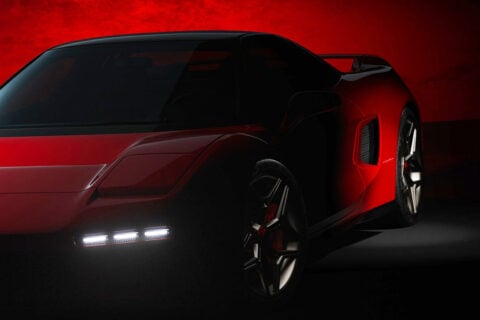
Lexus has lifted the veil on the LFA Concept, a boldly modern reimagining of its most revered sports car. Rather than resurrecting the V10 icon through nostalgia, Lexus is using the LFA to signal a new dynasty: one defined by the possibilities of a pure BEV sports car.

Developed in parallel with Toyota Gazoo Racing’s GR GT and GR GT3 projects, the LFA Concept inherits their three engineering cornerstones — a low centre of gravity, low weight with high rigidity, and uncompromising aerodynamic performance. It sits on a lightweight all-aluminium frame, shaped around an ideal driving position that mirrors Toyota’s motorsport machines. The silhouette flows low and long from nose to tail, carrying over the sculptural beauty of the original LFA while framing proportions that feel contemporary.

Chairman Akio Toyoda, better known in enthusiast circles as “Morizo”, has insisted that certain car-making skills must survive the industry’s electric transition. The LFA Concept stands as the flagship of that belief: a vehicle intended to preserve the essence of a true driver’s car while exploring the freedoms and packaging advantages BEVs enable. Lexus describes its development philosophy as Shikinen Sengu, which represents a ceremonial passing of knowledge from one generation of engineers to the next.

Inside, the cabin is trimmed to its essentials. A minimalist cockpit gathers every control around the driver, with a steering wheel designed to eliminate the need for hand repositioning and switchgear shaped for blind-touch precision.

Still a concept for now, it’s unclear how elements from the LFA will transform into production cars, but Lexus’s ambition to keep the thrill of driving alive in an electric era is certain.

A Last Word in W16
Bugatti Bolide final example

Bugatti has created many milestones over the decades, but few projects have embodied the same audacity as the Bolide. Now, with the final customer car of the limited 40 examples completed in Molsheim, the chapter closes on what may be the most uncompromising track-only hypercar ever to wear the famous horseshoe grille.

The Bolide set out to translate Bugatti’s engineering fantasy into reality: a featherweight, stripped-back machine built around the marque’s 8.0-litre quad-turbo W16, designed not for road use but for the gentleman racer who still wants a car with the presence and polish of a true Bugatti. That duality became the project’s defining challenge. Every surface, material, and detail had to meet the brand’s expected standards of refinement, even as performance was pushed to new extremes.

Development began in 2021 and quickly became one of Bugatti’s most intense modern programmes. By 2023, prototypes were pounding around Le Mans for the circuit’s centenary, where Andy Wallace clocked 350 km/h on the Mulsanne Straight. Track testing then ran day and night for months, engineers chasing perfection with the same relentlessness that once defined Ettore Bugatti’s racers.

The final Bolide pays tribute to that heritage more literally than most. Commissioned by a long-standing Bugatti collector, its bespoke blue-on-blue colourway is inspired by the owner’s own Type 35, which is the Grand Prix legend that cemented Bugatti’s pre-war dominance. He also owns a Veyron Grand Sport in the same palette, completing a personal trilogy that spans eras of performance.

The Bolide’s numbers remain astonishing even within the hypercar spectrum. With 1,600 hp and 1,600 Nm from the W16, Bugatti quotes 0–100 km/h in 2.2 seconds and a top speed of 380 km/h, thanks to extreme aero and minimal compromise. These figures underscore just how far Bugatti pushed the W16 for its final track-focused outing.

Lotus Esprit, Remastered
Encor Series 1

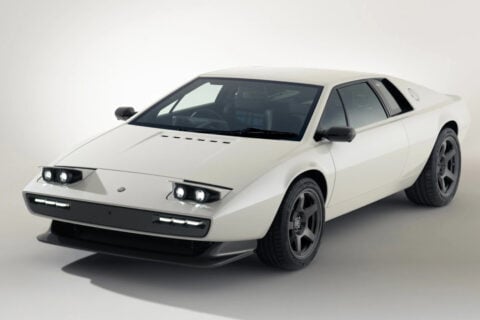
In a market awash with restomods, few projects carry the same sense of reverence and responsibility as the Encor Series 1, a meticulously remastered take on the original Lotus Esprit. The British automaker aims to preserve the soul of Giugiaro’s 1975 wedge-shaped icon while elevating performance, comfort, and craftsmanship to modern expectations.

Encor calls this process “remastering” for a reason. The car begins with the core principles of Lotus DNA, lightness, efficiency, and purity, before being reconstructed with contemporary techniques and materials. The most significant shift is structural: the Esprit’s steel backbone chassis gives way to a bespoke carbon-fibre monocoque, dramatically increasing rigidity and sharpening responses without compromising the original intent. The iconic silhouette remains unmistakable, its surfaces only subtly refined.

Power comes from a thoroughly re-engineered version of the mid-mounted Lotus Type 918 3.5-litre twin-turbo V8. Now producing 395 hp and 475 Nm, it promises 0–100 km/h in 4.0 seconds and a top speed of over 280 km/h, which is impressive given the projected kerb weight of just 1,200 kg.

Inside, the Series 1 delivers a complete transformation while remaining faithful to the Esprit’s T-shaped cockpit and wraparound binnacle. Machined aluminium, leather and Alcantara form the backdrop for digital interfaces, Apple CarPlay, 360-degree cameras, heated seats, and modern climate control ensure everything is completely up to date inside. It’s still unmistakably an Esprit interior, simply elevated to the standards of a contemporary grand tourer.

Only 50 examples of the Encor Series 1 will be built, each hand-crafted and individually numbered.

Born For Track Performance
Toyota Gazoo Racing GR GT3

Toyota Gazoo Racing has made no secret of its ambition to return to the top of global GT racing, and the recently revealed GR GT3 is its clearest statement yet. This prototype previews a full FIA GT3-spec customer racer built not from a production model but from a clean sheet, making it one of the most significant motorsport projects Toyota has ever undertaken.

Developed in parallel with the road-going GR GT, the GR GT3 follows a “driver-first” philosophy championed by Toyota chairman and master driver Akio Toyoda (Morizo). Professional racers Tatsuya Kataoka, Hiroaki Ishiura and Naoya Gamou have all played key roles in shaping the car from its earliest concept stage, ensuring the result is competitive yet approachable for gentleman drivers, which is a crucial requirement in the GT3 category.

The engineering brief centres on three pillars: a low centre of gravity, lightweight high-rigidity construction, and aerodynamic purity. To meet those targets, Toyota has adopted an all-aluminium frame for the first time in its racing history, inherited from the GR GT programme but refined specifically for GT3 demands. Wrapped around that structure is a race-tuned body focused entirely on airflow management and stability at the limit.

The 4.0-litre twin-turbo V8 found in the GR GT is expected to produce around 640 hp and 850 Nm of torque or more, sending drive exclusively to the rear wheels. Toyota has not disclosed precise details of the GR GT3’s version of the engine, noting only that many structural components will be shared with the GR GT. Of course, GT3 competitors typically run within the 500–600 hp range once Balance of Performance rules are applied.

Even in development form, the GR GT3 looks highly promising. Testing will continue through 2026 ahead of a planned launch in 2027, marking Toyota’s boldest GT-racing push in decades.

The Original M Car
1972 BMW 3.0 CSL Werks Development Car

BMW’s Motorsport division has produced icons for more than five decades, but every story has a beginning … and that beginning is now for sale. Known internally as E9/R1, this machine is the very first car ever built by BMW Motorsport GmbH in 1972, making it the original “M car” and one of the most historically significant BMW competition vehicles in existence.

Born during a period when privateer outfits like Alpina and Schnitzer were flying the BMW flag on track, the creation of a factory Motorsport arm was driven by then–sales boss Bob Lutz. He brought in former Porsche works driver Jochen Neerpasch and Ford technical ace Martin Braungart to establish a dedicated competition programme. Their first task was building this very car: chassis E9/R1, the first of just 21 factory CSL racers and the development platform that shaped BMW’s racing future.

Constructed over the winter of 1972–73, E9/R1 served as the test bed for what would become the legendary “Batmobile” aero kit. Hans Stuck and Harald Menzel spent the early months of 1973 pounding around Paul Ricard and Hockenheim, refining the package ahead of its homologation that summer. Once legal, BMW’s engineers famously worked overnight to bolt the new aero and 3.5-litre engine onto the cars just hours before race day, and E9/R1 soon delivered outright victories at the Nürburgring, Kassel-Calden and the Eifelpokalrennen.

After its European campaign, the car headed to IMSA with Hurtig Team Libra before eventually retiring to private ownership. Today, following a meticulous, originality-focused restoration and fresh from winning ‘Most Iconic Car’ at Salon Privé 2025, E9/R1 is being offered publicly for the first time through Dylan Miles in Kent.

A Revival From Travis Scott
Oakley MUZM X-Metal Juliet

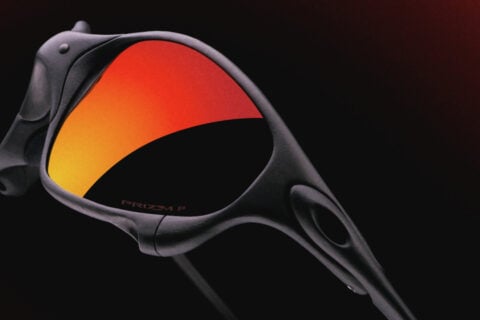
Oakley has never shied away from pushing boundaries, but its latest collaboration goes one step further. The brand has partnered with newly appointed Chief Visionary Officer Travis Scott to resurrect one of its most distinctive designs: the X-Metal Juliet.

Originally introduced in 1999 as one of Oakley’s most radical X-Metal creations, the Juliet quickly became known for its alien-like silhouette and titanium construction. The new MUZM edition doesn’t simply revisit that legacy. Each pair uses a 25-piece assembly of X-Metal, which is a liquid-metal titanium alloy forged under extreme conditions to create a skeletal frame that naturally conforms to the skull. Adjustable temple shocks, interchangeable nosebombs, and contoured orbitals return, now paired with Oakley’s latest Plutonite Prizm Polar lenses for maximum optical clarity.

As part of Oakley’s MUZM programme, which revives archival designs with modern innovation, the Juliet arrives as both a design artefact and a piece of wearable sculpture. Scott personally selected the model as his first official contribution to Oakley, a move that underscores his affinity for bold, technical aesthetics. Each pair includes a serialised collector’s coin and comes in a metal box to reinforce its rarity.

The Prizm Ruby Polar edition was limited to 100 units, available exclusively through a launch-day raffle at Oakley’s Shibuya flagship in late November. Two Cactus Jack versions, finished in Prizm Violet Polarised and Prizm Snow Black, are being distributed only through friends-and-family gifting to mark Oakley’s Tokyo takeover and Scott’s new role. While these may now be found only through resellers, given the momentum, more striking recreations are likely on the way.

Sharpening the Trackday Weapon
Manthey Porsche 911 GT3 Kit

The Porsche 911 GT3 has long been the go-to weapon for track-day regulars, but Manthey’s new performance kit for the 992.2 model turns the dial up even further. Developed over more than a year in close collaboration with Porsche’s R&D centre in Weissach, the kit pushes the GT3’s already formidable limits with deeper aero, chassis, and braking enhancements.

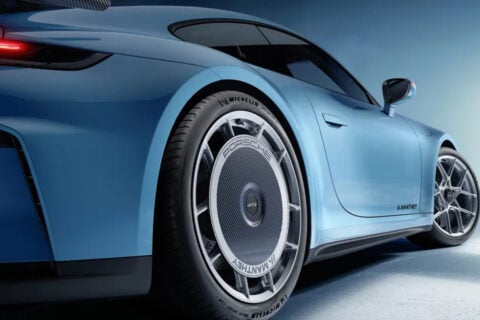
Manthey’s engineers have reworked almost every aerodynamic surface. The underbody becomes a single continuous aero element thanks to extended 1.5-metre turning vanes, a smoothed trunk-well cover to reduce turbulence, a more pronounced front lip, and revised diffuser fins. At the rear, a wider gooseneck wing with a gurney flap, enlarged endplates, and a reprofiled diffuser help plant the car at high speed. Optional carbon aero discs for the rear wheels cut drag and complete the purposeful look. The numbers say it all: up to 540 kg of downforce at 285 km/h in full track configuration.

The suspension sees a major overhaul, too. A newly developed four-way adjustable coilover kit increases mechanical grip while accommodating the higher downforce loads, with spring rates and damping calibrated for circuit use. Buyers can also opt for lightweight forged wheels that shed 6 kg of unsprung mass.

Braking performance has been sharpened with steel-braided lines as standard and optional motorsport-grade pads for PCCB-equipped cars. The result is a more consistent pedal feel and improved endurance over long sessions.

Behind the wheel of a 911 GT3 fitted with the Manthey Kit, DTM champion Ayhancan Güven lapped the Nordschleife in 6:52.981 minutes, which is 2.76 seconds quicker than the previous-generation GT3 running Manthey hardware, despite damp patches on the track.

The Manthey Kit goes on sale in March 2026, with pricing starting from €41,911 plus taxes and installation, and crucially, Porsche’s factory warranty remains fully intact.